
If you are putting in the effort to create content but still aren’t seeing the results you expect, you are likely asking: Why is my website not ranking on Google It is a common challenge, but it is rarely a mystery. Often, the barrier between you and the first page is a combination of technical debt, misunderstood search intent, and a lack of domain authority.
Phase 1: Diagnosing the “Why”
Before you change anything, you must understand where your site is failing. Many business owners struggle because they don’t use Google Search Console to check for crawl errors. If you have been searching,Why is my website not ranking on Google your first step is ensuring that Google can actually “see” and index your pages.
The Role of User Intent
Many sites fail because they provide “generic” information. To rank, your content must satisfy the specific intent behind the search. If your content is not better or more useful than the top-ranking page, you will not replace it. Frequently, the reason for the question, “Why is my website not ranking on Google?” is simply that the content doesn’t fully answer the user’s underlying question.
Phase 2: How to Increase Organic Traffic (Step-by-Step)
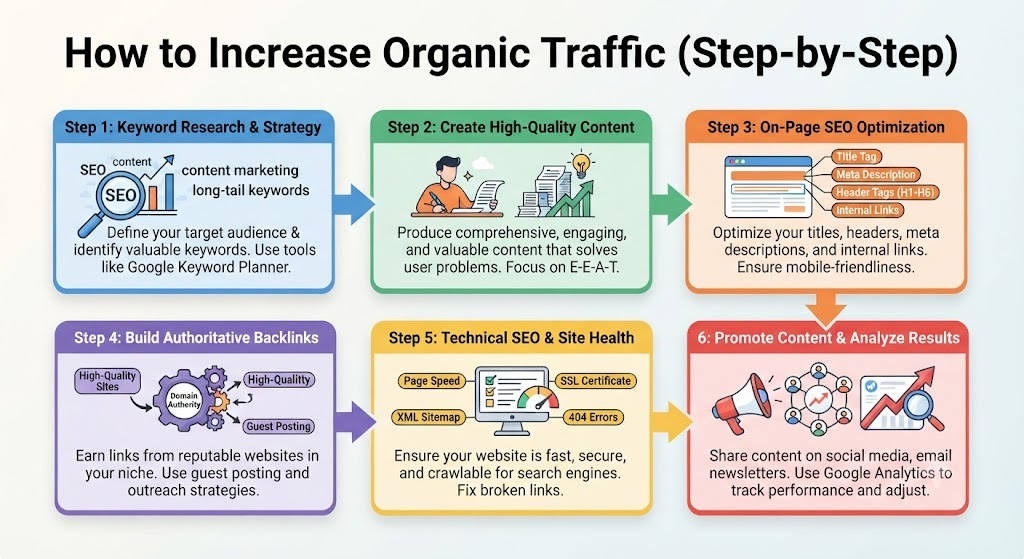
To increase organic traffic, you need a multi-layered approach that addresses both how search engines read your site and how users interact with it.
1. Optimize for Technical SEO
Search engines are machines. If your site is slow, mobile-unfriendly, or has broken internal links, the algorithm will penalize you. When a site owner asks,Why is my website not ranking on Google the answer is often hidden in slow load speeds or poor mobile responsiveness.
2. Leverage Long-Tail Keywords
Instead of fighting for high-competition keywords, look for long-tail phrases. These are specific questions your customers ask. These keywords are easier to rank for and almost always have a higher conversion rate because the intent is clearer.
3. Internal Linking Architecture
Don’t let your pages sit in isolation. Link your new articles to your high-performing pages. This creates a “web” that helps Google crawl your site and distributes your authority across all your content.
Phase 3: Building Authority to Boost Google Search Ranking
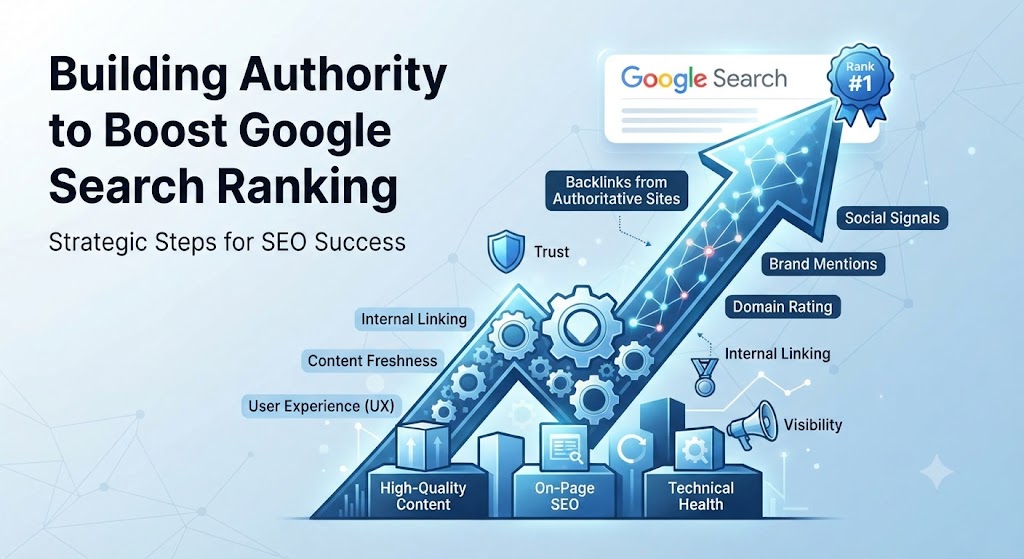
Even the best content can struggle to climb the Google search ranking if the site itself isn’t seen as an authority. This is where your SEO strategy becomes the deciding factor.
The Power of High-Quality Backlinks
Search engines view links from other reputable websites as a signal of credibility. If your site has zero authoritative backlinks, you are effectively a stranger to Google. If you are still wondering Why is my website not ranking on Google despite having good content, it is likely because you lack the votes from other sites to prove your authority. If you lack the time to manage outreach, using Professional Link Building Services can help you secure these crucial signals of trust efficiently.
Content Freshness and Updates
Google favors content that is kept up to date. Go back to your old articles every six months. Add new data, update your statistics, and remove outdated advice. This simple habit is one of the most effective ways to maintain your growth.
Phase 4: When to Hire a Digital Marketing Agency
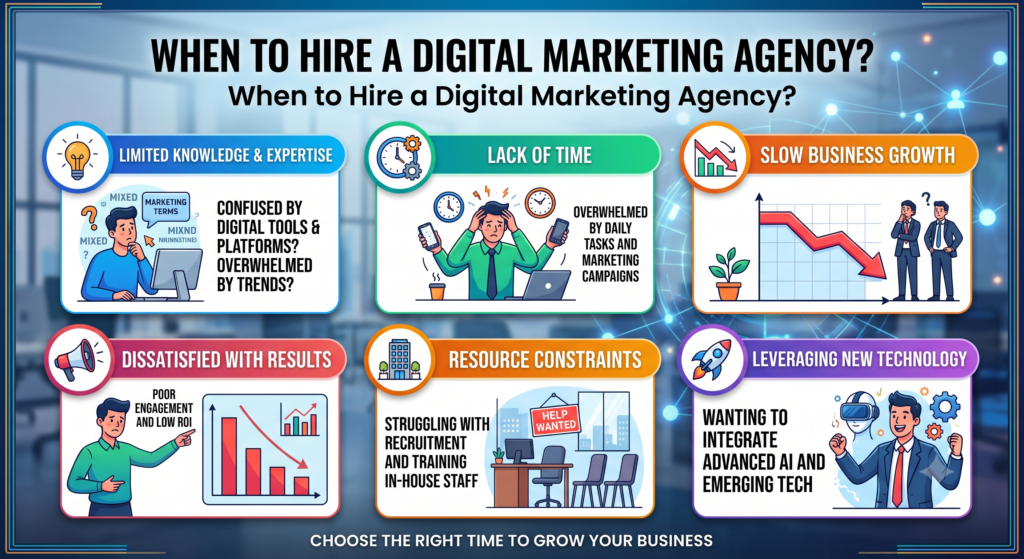
Sometimes, the complexity of SEO outweighs what a business owner can manage alone. If your traffic has plateaued for months, it may be time to consult a digital marketing agency. They can conduct a deep technical audit, identify hidden issues, and implement a long-term strategy that allows you to focus on your actual business operations.
FAQ
Q1: Why is my website not ranking on Google even though I have many pages?
Quantity does not equal quality. If you have many pages that are thin, unhelpful, or duplicate, it can actually hurt your site. Focus on consolidating your content into high-quality, comprehensive guides.
Q2: How can I increase organic traffic if I have a low budget?
Focus on Content-Led SEO. Create detailed tutorials, case studies, and FAQ pages that solve your customers’ problems. When your content is truly helpful, you are more likely to earn free, natural backlinks.
Q3: How long until I see real growth?
SEO is a long-term game. While minor technical fixes can show results in weeks, meaningful traffic growth usually takes 3 to 6 months of consistent effort.
Q4: Do I need to be a tech expert to fix my ranking?
No. Most platforms like WordPress or Shopify have tools to handle the basics. If you are struggling with complex technical issues, that is where professional help becomes valuable.
Q5: Is it still possible for small websites to beat big brands?
Absolutely. While big brands have more budget, they are often slow and generic. Small sites can win by being more specific, more helpful, and more personable.