
Let’s be brutally honest for a second. You spend hours scraping contact details, writing emails, and pitching topics, only to hear absolute crickets from blog editors. Sound familiar?
Table of Contents
If your outreach campaigns are falling flat, the problem usually isn’t your niche or the websites you are targeting. More often than not, it comes down to a handful of fundamental guest posting mistakes that immediately send your emails to the trash folder.
Guest blogging is still one of the most powerful strategies for building high-authority backlinks, driving targeted referral traffic, and establishing yourself as an industry thought leader. However, the game has changed. Editors of high-authority sites are bombarded with hundreds of pitches every single week. They can spot a lazy, automated outreach template from a mile away.
In this comprehensive guide, we are going to break down the most common guest posting mistakes that marketers and SEOs make. More importantly, we will show you exactly how to fix these guest posting mistakes so you can start landing premium placements on top-tier websites.
Let’s dive right into the errors that are holding your SEO campaigns back.
Mistake 1: Ignoring the Website’s Guest Post Guidelines
Imagine walking into a fine-dining restaurant and asking for a cheeseburger. You’d probably get kicked out, right? The same logic applies to pitching blogs.
One of the most unforgivable guest posting mistakes is failing to read the target blog’s “Write for Us” page. Editors spend a lot of time crafting these guidelines to ensure they receive content that fits their audience and editorial standards. Ignoring them is the fastest way to get blacklisted.
What happens when you commit this error:
- You pitch a 500-word article when their minimum requirement is 1,500 words.
- You pitch topics they explicitly said they don’t accept.
- You forget to include a specific phrase in your email subject line (a common trap editors use to filter out people who don’t read the rules).
How to Fix It: To avoid these foundational guest posting mistakes, always hunt for a guidelines page before sending an email. Search Google using operators like site:targetblog.com "guest post guidelines". Read every single word. If they ask you to format your pitch a certain way, do it exactly as requested.
Mistake 2: Sending Generic, Copy-Paste Pitch Emails
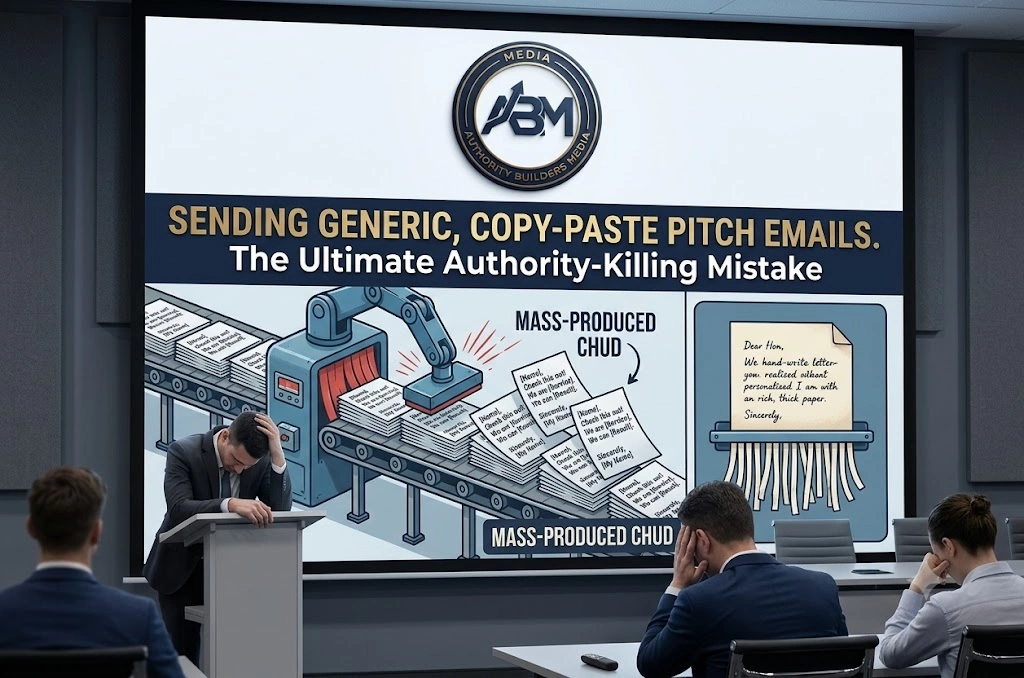
“Dear Webmaster, I am an avid reader of your blog and I love your highly insightful posts. I want to contribute an article…”
If your pitch starts like this, hit the delete button right now. Blog editors receive dozens of these identical, robotic emails daily. Falling back on automated templates is one of those guest posting mistakes that screams, “I scraped your email and put it into a mass outreach tool.”
How to Fix It: Eliminating these guest posting mistakes requires a human touch. Here is a framework that actually works:
- Use their real name: Find the editor or content manager on LinkedIn.
- Mention something specific: Reference a recent article they published and explain why you liked it.
- Get straight to the point: Introduce who you are and why you are qualified.
- Pitch 3 tailored ideas: Give them catchy titles and a 2-sentence summary.
Mistake 3: Pitching Topics They Have Already Covered
There is nothing more frustrating for an editor than receiving a pitch for “The Ultimate Guide to On-Page SEO” when they literally published an article with that exact title three weeks ago. This is one of the most easily avoidable guest posting mistakes, yet it happens constantly.
How to Fix It: Before you finalize your pitch topics, do a quick site search to ensure you aren’t making these redundant guest posting mistakes. Go to Google and type: site:theirwebsite.com [your topic keyword]. If they have already covered it, pitch a completely different topic or offer a highly unique, advanced angle on the existing subject.
Mistake 4: Focusing Solely on Domain Authority (DA)
We all want that juicy backlink from a DA 90 website. However, blinding yourself to everything except Domain Rating (DR) or Domain Authority (DA) is one of the most common guest posting mistakes in modern SEO.
Google’s algorithms prioritize topical relevance. A backlink from a DA 40 blog that is strictly in your niche is often much more powerful than a backlink from a DA 80 general news site.
How to Fix It: Prioritize relevance over raw metrics to stop making these metric-obsessed guest posting mistakes. Create a target list of blogs that share your exact target audience. Look at their audience engagement, social media presence, and actual organic traffic.
Mistake 5: Writing Thin, Low-Quality Content
Some marketers treat guest posts as a chore, farming out cheap, 600-word fluff pieces just to secure the backlink. Submitting subpar content is one of the most damaging guest posting mistakes because it ruins your reputation with that editor forever.
How to Fix It: Treat a guest post exactly like you would treat a flagship pillar post on your own website.
- Aim for high word counts (1,500+ words).
- Include custom graphics, screenshots, or infographics.
- Back up your claims with recent data and studies. By over-delivering, you ensure you never fall victim to quality-related guest posting mistakes.
Mistake 6: Being Overly Promotional
A guest post is an educational piece of content, not a sales brochure for your product. If your article reads like an advertisement, it will get rejected. Of all the guest posting mistakes out there, being overly promotional is the one editors have the least patience for.
How to Fix It: Follow the 90/10 rule to steer clear of these promotional guest posting mistakes. 90% of your article should be pure, actionable value. The remaining 10% can be a natural, non-intrusive mention of your brand. Save your primary call-to-action for your author bio.
Mistake 7: Over-Optimizing Your Anchor Text
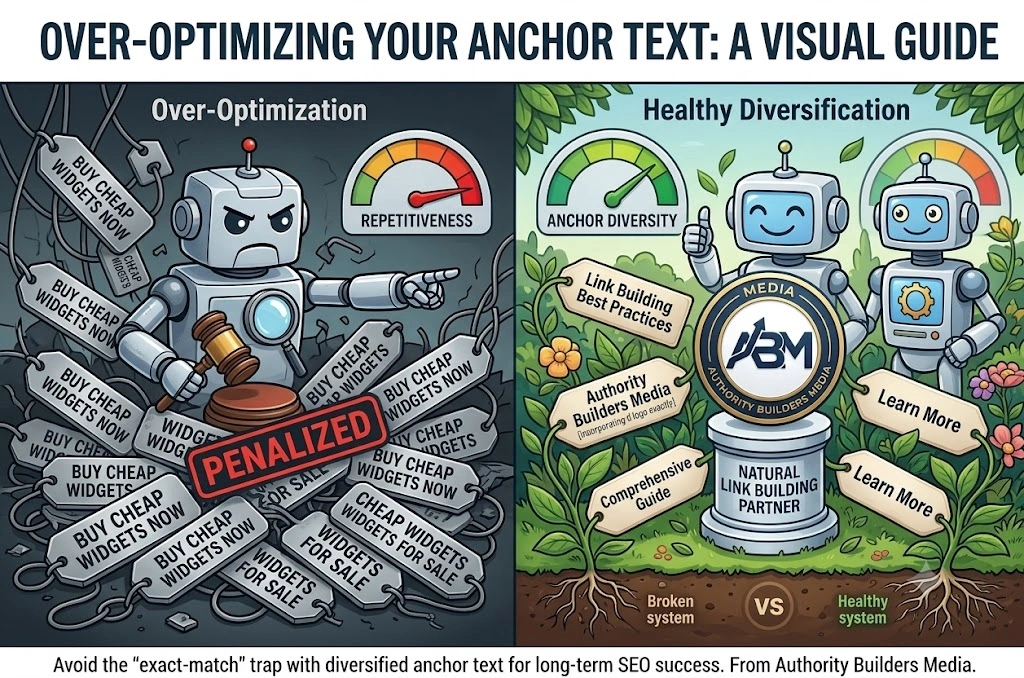
In the early days of SEO, you could rank a page by blasting it with exact-match anchor text. Today, making these exact-match guest posting mistakes will trigger spam filters and can lead to manual penalties from Google.
How to Fix It: Keep your anchor text natural. Use branded anchors, naked URLs, or descriptive, long-tail variations. Preventing SEO-heavy guest posting mistakes means writing for humans first, and algorithms second.
Mistake 8: Forgetting to Link to the Host’s Internal Pages
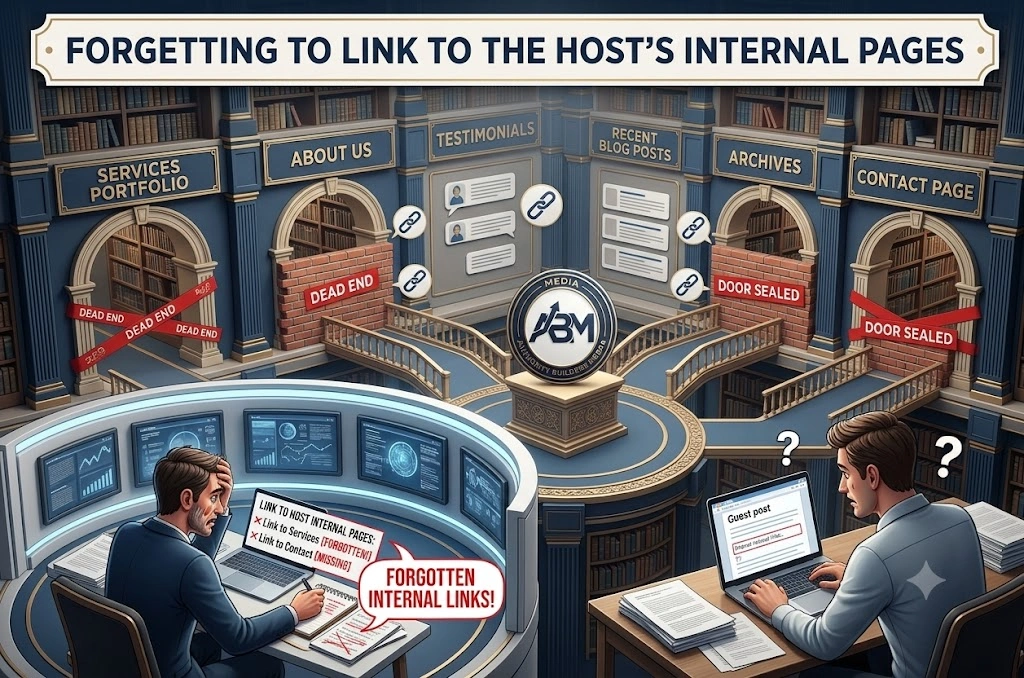
This is a massive missed opportunity. Most guest bloggers only care about linking back to their own site. Not linking to the host’s content is one of those subtle guest posting mistakes that shows you only care about yourself.
How to Fix It: While drafting your post, find 3 to 5 relevant articles on the host’s blog and link to them internally. This saves the editor time and significantly reduces the friction of getting your post published.
Mistake 9: Terrible Formatting and Poor Grammar
You would be shocked at how many people submit guest posts in unformatted Google Docs with no headings and glaring spelling errors. An editor’s job is to review content, not to clean up formatting guest posting mistakes.
How to Fix It: Make your article “publish-ready.” Run the text through Grammarly, use standard formatting (H2 and H3 tags), and keep paragraphs short. Avoiding structural guest posting mistakes makes editors love working with you.
Mistake 10: Writing a Boring Author Bio
Your author bio is usually the only place where you are guaranteed a backlink and a direct call to action. Wasting this space with a generic description is one of the biggest conversion-killing guest posting mistakes.
How to Fix It: Treat your bio as a landing page hook. Establish authority, include a compelling CTA, and offer a specific lead magnet to drive targeted traffic back to your site.
Mistake 11: Not Replying to Comments (Posting and Ghosting)
The work isn’t done the moment the post goes live. One of the biggest guest posting mistakes is “posting and ghosting.” Leaving readers hanging makes you look unprofessional.
How to Fix It: Check the URL a week after publication and reply to every single comment thoughtfully. Engaging with the audience ensures you don’t make community-building guest posting mistakes.
Mistake 12: Failing to Promote the Published Piece
If a blog gives you a platform and a valuable backlink, you should help drive traffic to that page. Forgetting to share the article is one of the most common post-publication guest posting mistakes.
How to Fix It: Promote the guest post as heavily as you would promote your own content. Share it on LinkedIn, Twitter, and your email newsletter.
Mistake 13: Pitching the Wrong Person
Sending your pitch to info@website.com or support@website.com is a guaranteed way to get ignored. Targeting the wrong department is one of those guest posting mistakes that wastes your entire effort.
How to Fix It: Take the time to find the decision-maker. Go to LinkedIn and search for the Content Manager or Managing Editor. Pitching the right inbox solves half of your outreach guest posting mistakes.
Mistake 14: Giving Up After One Follow-Up
Editors are busy people. Giving up after your initial pitch gets no response is a massive error. These follow-up guest posting mistakes leave countless opportunities on the table.
How to Fix It: Implement a polite follow-up sequence. Send a gentle nudge on Day 4 and Day 10. Persistence is key to overcoming outreach guest posting mistakes.
Mistake 15: The “One and Done” Mentality
Most people secure a guest post, get their backlink, and never speak to the editor again. This is one of the biggest networking guest posting mistakes.
How to Fix It: If your first guest post performs well, pitch them again three months later. Building a long-term relationship is far more valuable than a single backlink.
The Anatomy of the Perfect Pitch (How to Avoid Guest Posting Mistakes)
To help you actively avoid the guest posting mistakes mentioned above, here is a proven, human-sounding outreach template:
Subject: Idea for the [Blog Name] blog: [Insert Catchy Topic]
Body:
Hi [Editor’s First Name],
I was just reading your recent post on [Topic] and I absolutely loved the point you made.
My name is [Your Name], and I run content over at [Your Company]. I know you’re incredibly busy, and I want to make sure I don’t make the usual guest posting mistakes by sending a generic pitch.
I’d love to contribute an in-depth, original article to your audience. Based on your current content, I noticed you haven’t covered these angles yet:
1. [Topic Idea 1] (1-2 sentences explaining the core takeaway). 2. [Topic Idea 2] (1-2 sentences explaining what the post will cover). 3. [Topic Idea 3] (1-2 sentences explaining the value).
I am happy to write these to your exact editorial guidelines to ensure a flawless submission. Let me know if any of these hit the mark!
Best regards, [Your Name]
Conclusion
Guest blogging is far from dead, but the era of lazy, mass-produced outreach certainly is.
By taking the time to personalize your pitches, adhering strictly to editorial guidelines, and treating the content you provide as a premium asset, you can easily stand out. Avoiding these 15 critical guest posting mistakes will dramatically increase your acceptance rate, helping you secure high-authority backlinks, boost your organic rankings, and drive highly qualified traffic to your website.
Stop treating outreach like a numbers game. Learn from these guest posting mistakes, treat the process like a relationship-building strategy, and the SEO rewards will naturally follow.
Frequently Asked Questions (FAQs)
Q1: What is the most damaging of all guest posting mistakes in 2026?
The single most damaging error is prioritizing Domain Authority (DA) over topical relevance. In modern SEO, getting a backlink from a massive but unrelated website is far less effective than securing a link from a smaller, highly relevant blog in your specific niche. Chasing metrics instead of relevance is a surefire way to waste your time and budget.
Q2: How can I recover if I have already made these guest posting mistakes in my outreach?
If you have already sent generic pitches and received no response, do not panic. Wait a few weeks, and then send a completely fresh, highly personalized pitch to the same editor using a different angle. Acknowledge that your previous email might not have been a perfect fit, and present your new, well-researched ideas. Editors appreciate writers who adapt and improve.
Q3: Does paying for blog placements count as one of the major guest posting mistakes? Yes. According to Google’s updated spam policies, buying or selling links for the purpose of manipulating search rankings is strictly prohibited. Engaging with link farms or sites that openly advertise “paid guest posts” can lead to severe manual penalties. Focus on building genuine relationships and earning links through high-quality content instead.
Q4: How many backlinks should I include to avoid looking spammy?
To avoid triggering spam filters—one of the classic guest posting mistakes—you should stick to one contextual link within the body of the article (only if it genuinely adds value to the reader) and one link in your author bio. Always prioritize internal links to the host website’s other articles before adding your own external links.
Q5: Why do editors ignore my follow-up emails?
If your follow-ups are being ignored, it usually boils down to two guest posting mistakes: either your initial pitch was too generic, or your follow-up was pushy and demanding. Keep your follow-ups polite, brief, and value-driven. If you still don’t hear back after two follow-ups, gracefully move on to the next prospect on your list.