
When launching a new blog or business platform, the biggest challenge is driving free, organic traffic from Google. Great design and good content aren’t enough on their own. You need to configure specific settings to help search engines understand what your platform is all about. If you start with the right strategy, you can cut down your ranking time drastically. Keeping this in mind, I have put together a highly practical SEO checklist for new website owners. Following these steps will help you build a rock-solid foundation.
1. Basic Setup & Tools
Before writing a single word, you need the right tools. Start your journey with these essentials:
- Google Search Console (GSC): This free tool from Google is an absolute must. Connect it to see how search engines crawl and index your pages.
- Google Analytics: Track your visitors, see their locations, and find out which pages they love reading the most.
- Optimization Plugin: If you use WordPress, install a lightweight plugin like Rank Math or Yoast to help guide your writing.
2. On-Page Optimization
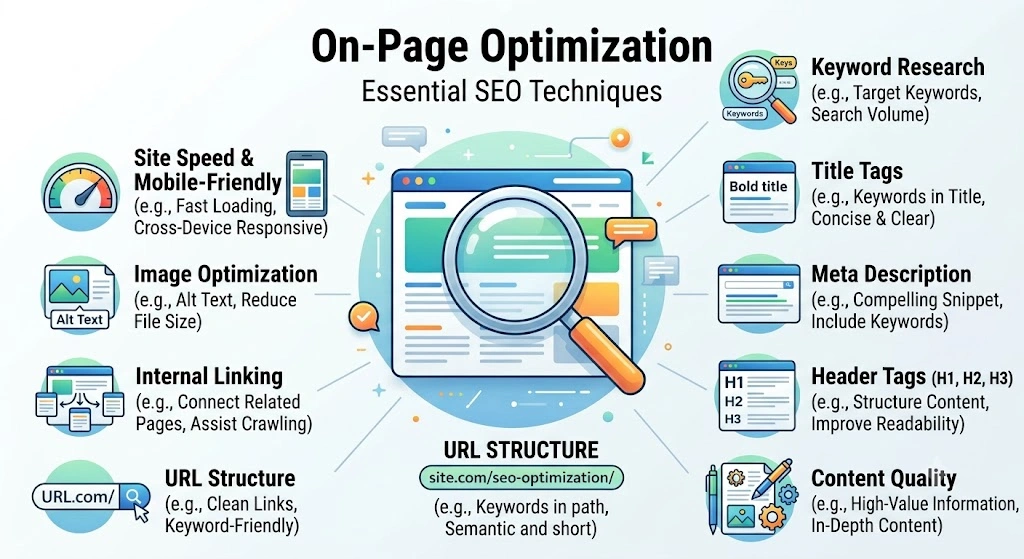
Keep these key factors in mind while publishing your content:
- Keyword Placement: Naturally place your primary focus keyword in your article title, the URL slug, and within the first paragraph of your post.
- URL Structure: Keep links short, clean, and easy to read (e.g., domain.com/seo-tips).
- Meta Description: Write a catchy 150-160 character summary that forces users to click on your link when it appears in search results.
- Image Alt Text: Search engines cannot “see” images visually. Always add descriptive Alt Text to tell them what the image represents.
- Internal Linking: Connect your older articles to your newly published posts. Building a web of related posts is a powerful technique.
3. Keyword Research & Planning

Before you write, you need to know what your audience is actually typing into Google. Adding a solid keyword strategy to your SEO checklist for new website ensures you aren’t shooting in the dark.
- Target Long-Tail Keywords: Instead of fighting for highly competitive one-word terms (like “laptops”), focus on 3 to 4-word phrases (like “best budget laptops for students”). They have far less competition and bring highly targeted visitors who are ready to read or buy.
- Competitor Analysis: Look at what top-ranking sites in your niche are doing. Identify the topics they cover, find the missing information in their articles, and create a much more detailed and updated version for your own audience.
4. Technical SEO
If your backend isn’t sound, even the greatest content will struggle to rank.
- Site Speed: Nobody likes a slow-loading page. Use a reliable hosting provider and caching plugins to keep loading times under 3 seconds.
- Mobile-Friendly Design: Over 80% of internet traffic now comes from smartphones, so ensure your layout looks perfect and responds well on mobile devices.
- SSL Certificate (HTTPS): This encrypts data and makes your site secure for visitors. It is a mandatory ranking factor today.
- XML Sitemap & Robots.txt: Create a sitemap and submit it to Search Console so search engine bots can easily navigate and find all your important pages.
5. Local Search Fundamentals
If you are running a local business or a service-based agency, your SEO checklist for new website must absolutely include local search optimization to attract customers from your specific city.
- Google Business Profile (GBP): Claim and verify your free Google Business listing. Fill out every detail, including your exact address, working hours, and a list of services, so you can appear on Google Maps and local search packs.
- Consistency in NAP: NAP stands for Name, Address, and Phone number. You need to ensure these three details are completely identical across your website footer, social media pages, and local directory listings to build trust with search engine algorithms.
6. Off-Page & Content Strategy

- Quality Content: Always focus on user search intent. Write high-quality, original content that actually solves the reader’s problem without fluff.
- Social Profiles: Claim your brand name on platforms like Facebook, Instagram, X (Twitter), and Pinterest early on to share your fresh links and build initial traction.
Conclusion
Search engine optimization is not magic; it requires patience and consistency. If you strictly follow the complete SEO checklist for new website shared above without skipping the technical or research steps, you will likely see organic traffic flowing in within 3 to 6 months. Stay focused on delivering great content, and the results will naturally follow.
Frequently Asked Questions (FAQs)
Q1. How long does it take for a brand-new blog to rank on Google? Ans. It generally takes around 3 to 6 months to break out of the Google sandbox and start ranking for decent search terms. This timeframe heavily depends on your niche competition, your consistency, and the overall quality of your content.
Q2. Should I include backlink building in my SEO checklist for new website from day one? Ans. Not at all. For the first month or two, your focus should be entirely on publishing high-quality articles, improving site speed, and mastering on-page optimization. Once you have published 20 to 25 solid posts, you can start exploring guest posting and link building.
Q3. What is the best optimization plugin for beginners? Ans. For WordPress users, Rank Math is currently the top choice. Even its free version offers incredibly advanced features like automated sitemap generation, schema markup, and basic keyword tracking, making it perfect for new bloggers.