
Launching a new website is exciting, but attracting visitors can be challenging. That’s where SEO Tips for Startup Websites become essential. Search Engine Optimization (SEO) helps startups improve their visibility on Google, reach potential customers, and build long-term organic traffic without relying only on paid advertising.
Unlike large companies with bigger marketing budgets, startups need cost-effective strategies that deliver sustainable growth. By following SEO Tips for Startup Websites and best practices, startup websites can compete with established businesses and create a strong online presence.
Why SEO Is Important for Startup Websites
Many founders overlook SEO during the early stages of their business. However, investing in SEO Tips for Startup Websites from the beginning can create a solid foundation for long-term success.
SEO Tips for Startup Websites help:
- Increase organic traffic from search engines.
- Build trust and credibility with potential customers.
- Improve user experience and website performance.
- Generate qualified leads without high advertising costs.
- Support long-term business growth.
Google rewards websites that publish original, helpful, and trustworthy content. By focusing on user intent and providing accurate information, startups can gradually improve their search rankings and establish authority in their industry.
SEO for Startup Websites: The Basics
Understanding the basics of SEO Tips for Startup Websites is the first step toward building a successful digital presence.
A complete strategy includes:
- Keyword Research: Identify the phrases your audience is searching for.
- On-Page SEO: Optimize titles, headings, URLs, images, and content.
- Technical SEO: Ensure fast loading speed, mobile responsiveness, HTTPS security, and proper indexing.
- Content Marketing: Publish valuable blog posts that answer users’ questions.
- Link Building: Earn high-quality backlinks from relevant and authoritative websites.
This guide focuses on creating helpful content while following Google’s quality guidelines. Consistency is more important than publishing a large number of articles at once.
Beginner SEO for Startups: Step-by-Step Guide
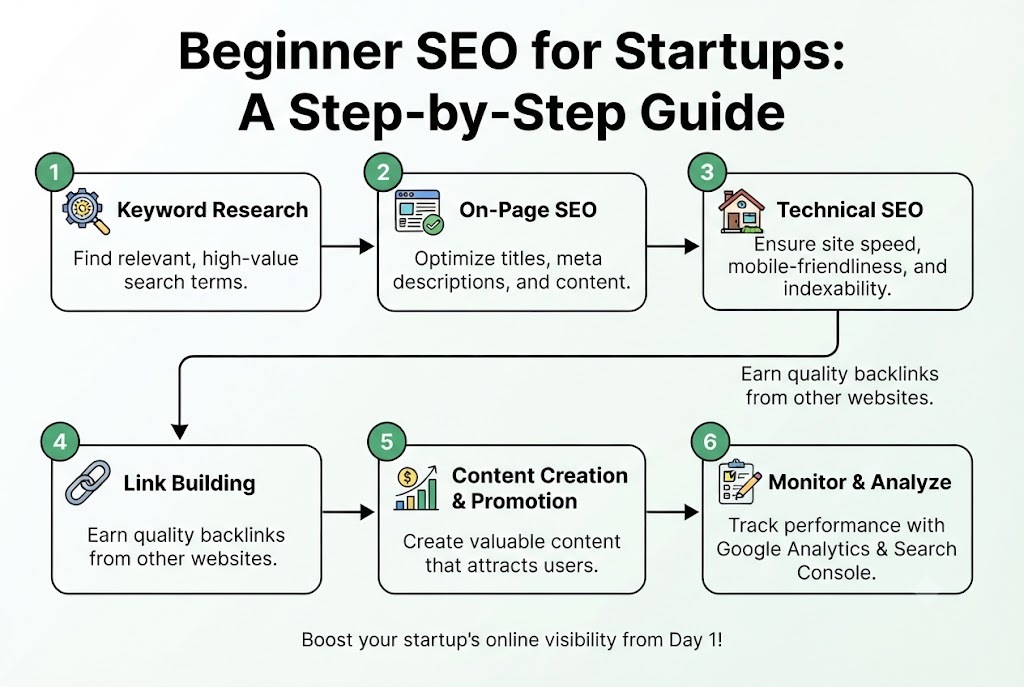
If you’re new to the field, these SEO Tips for Startup Websites can help you get started:
- Research keywords that match your business and customer needs.
- Create unique, informative content that solves real problems.
- Optimize every page with clear titles and meta descriptions.
- Improve website speed and mobile usability.
- Build internal links between related pages.
- Create and submit an XML sitemap to Google Search Console.
- Monitor your website’s performance and update content regularly.
Following these steps consistently will help search engines understand your website and improve your chances of ranking for relevant searches.
How to Do SEO for a Startup Website
Many business owners ask how to apply SEO Tips for Startup Websites without hiring a large marketing team. The answer is to focus on quality rather than shortcuts.
Start by publishing content that demonstrates expertise and answers your audience’s questions. Optimize each page for one primary topic, use descriptive headings, and naturally include relevant keywords. Add internal links to important service pages, optimize images with alt text, and ensure your website is secure and mobile-friendly. Building backlinks from reputable websites through guest posting and digital PR can further strengthen your website’s authority over time.
Common SEO Mistakes Startup Websites Should Avoid
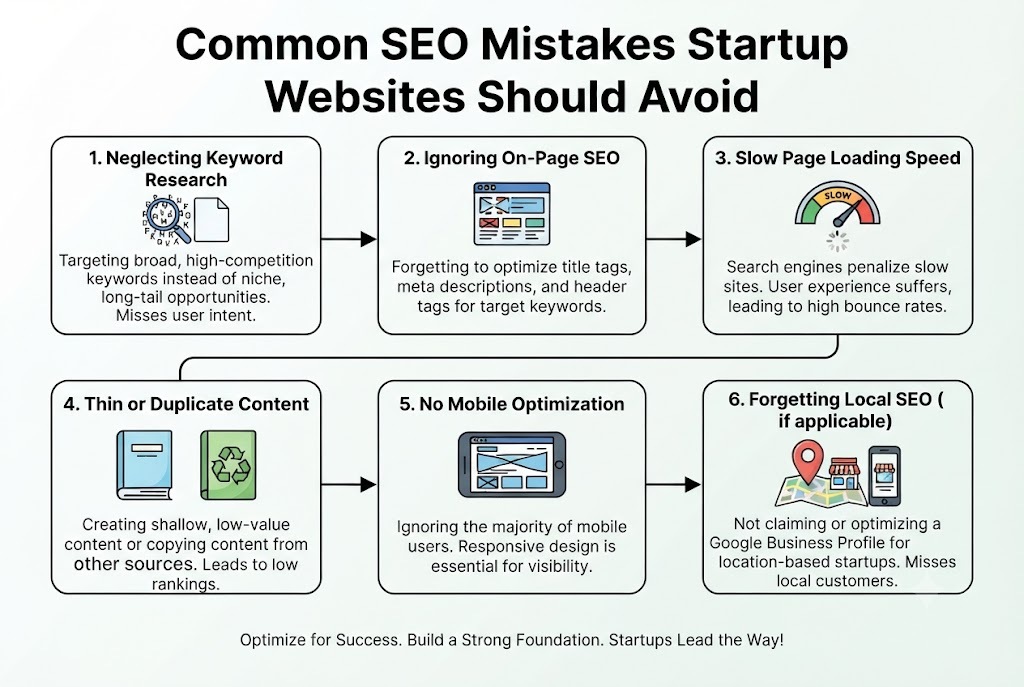
Even when following the best SEO Tips for Startup Websites, beginners often make avoidable mistakes, such as:
- Publishing thin or duplicate content.
- Ignoring keyword research.
- Stuffing keywords unnaturally into content.
- Forgetting to optimize page titles and meta descriptions.
- Having slow-loading pages.
- Not using internal links.
- Ignoring technical SEO issues.
- Expecting instant ranking results.
SEO is a long-term investment. Focusing on user experience, valuable content, and continuous improvement will produce better results than chasing quick fixes.
Conclusion
Applying these SEO Tips for Startup Websites can help new businesses build a stronger online presence and attract qualified visitors. The key is consistency and quality. By following Google’s best practices and creating helpful, trustworthy content, startups can earn sustainable organic traffic and grow their business over time.
Frequently Asked Questions (FAQs)
1. What are the best SEO tips for startup websites? The best SEO Tips for Startup Websites include performing keyword research, publishing high-quality content, optimizing technical SEO, improving website speed, and earning quality backlinks.
2. Why is SEO important for startup websites? SEO helps startup websites increase organic traffic, improve online visibility, build trust, and generate long-term leads without depending solely on paid advertising.
3. Can beginners do SEO for a startup website? Yes. With the right strategy and consistent effort, beginners can successfully implement SEO Tips for Startup Websites by learning the fundamentals and following proven best practices.
4. How long does SEO take for a startup website? Most startup websites begin seeing measurable improvements within three to six months, depending on competition, website quality, and the consistency of SEO efforts.
5. What is the biggest SEO mistake startups make? One of the biggest mistakes is publishing low-quality content while ignoring technical SEO and user experience. High-quality, helpful content combined with proper application of SEO Tips for Startup Websites delivers the best long-term results.